 WebTicTacToe
Beat Impossible Tic Tac Toe
Think you can beat a perfect AI? Learn the secrets behind the minimax algorithm and whether it can ever be defeated.
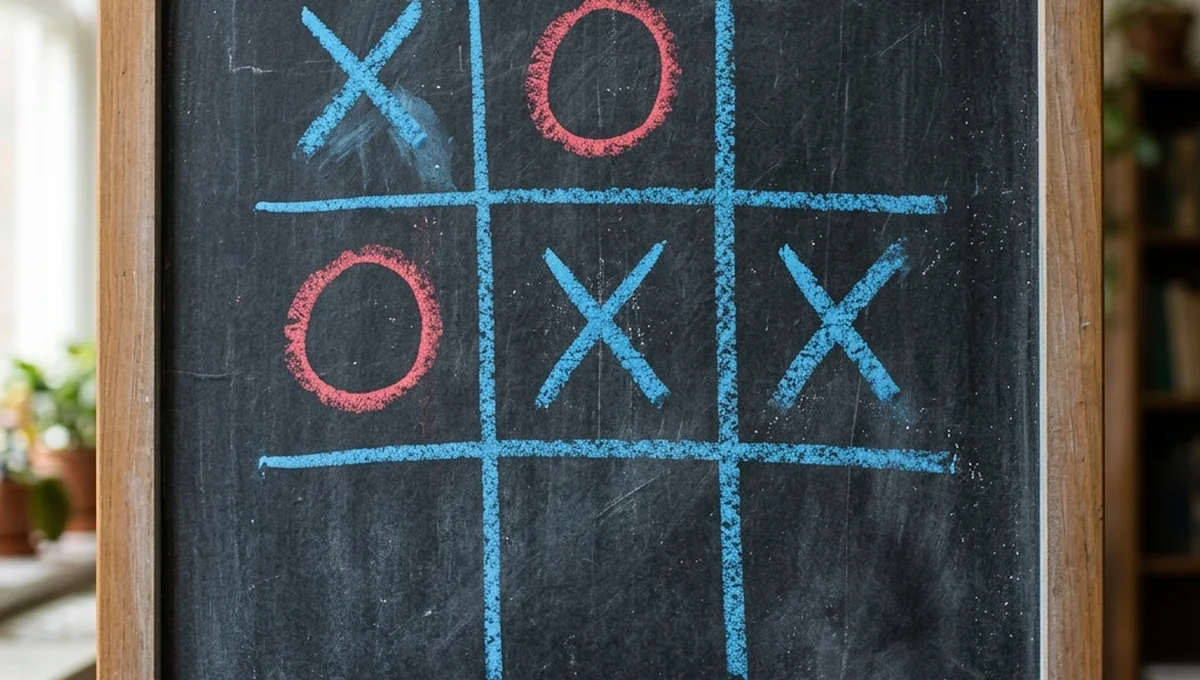
Beat the Impossible Tic Tac Toe AI
This computer is locked to **Impossible**. It evaluates all 255,168 potential game pathways on every move. Can you secure the draw, or will you slip up?
Mode: VS. Impossible AI
Full Depth Minimax Decision-Tree Active
Match Score
0
Wins
0
Draws
0
Losses

Why is Tic Tac Toe Solved?
In game theory, Tic Tac Toe is defined as a **zero-sum game of perfect information**. This means that there are no hidden elements, no luck, and every state of the board is completely visible to both players. Because the total number of unique valid board configurations is relatively small (specifically 255,168 possible scenarios), a computer can easily map out the entire decision tree down to the final moves.
Using the **Minimax Algorithm**, the AI assigns utility scores to terminal outcomes: a Win is scored as +10, a Loss as -10, and a Draw as 0. By recursively backtracking from the end of the game tree, the AI makes decisions under the assumption that you will play optimally. Consequently, it chooses the move that maximizes its score while minimizing yours.
"Under perfect play from both opponents, a game of standard 3x3 Tic Tac Toe will always end in a draw. It is mathematically impossible to defeat a perfect player going first or second."
How to Secure the Draw
Since you cannot beat the Impossible AI, your objective in every round is to secure the draw. Here are the core rules of perfect defense:
- **If you go first (Player X):** Always start in a corner. The corner opening restricts your opponent's drawing opportunities. If they do not choose the center square immediately, you can force a winning double-threat fork.
- **If the AI goes first and opens in a corner:** You *must* take the center square immediately. Any other response (like taking an edge) will lead to an immediate loss if the AI follows its perfect decision tree.
- **Avoid edge cells in early defense:** Edges are generally weak defensive cells. If the AI places an X in a corner, placing your O on an adjacent edge gives the AI a direct path to a fork.